—2025年萬佛聖城冬季禪七心得分享
劉親法居士2026年1月26日晚間講於萬佛聖城大殿
諸佛菩薩,師父上人,大慈大悲的觀世音菩薩,諸位尊敬的法師,諸位法友,阿彌陀佛,今天是親法和大家結法緣,練習如何講法。
All Buddhas and Bodhisattvas, Venerable Master Hua, Greatly Compassionate Bodhisattva Avalokiteśvara, respected Dharma Masters, dear Dharma friends, Amitabha! Today, it is Qin Fa’s turn to tie Dharma affinity with everyone, learning how to speak dharma.
每年的冬天對我來說,兩個最重要的法會就是彌陀七和禪七。首先我覺得在這樣一個末法時代,這樣一個混亂不安、人心被物慾牽著鼻子走得喘不過氣來的世界,還能有一片淨土,在裡面打佛七,之後還能有一個完整三週的禪七可以參禪打坐,真是人間稀有之事。尤其現在這個社會,能具備種種善因緣,來打一個完整的佛七和禪七,真不是一件簡單的事,這是給多少金子、多少銀子也買不來的出世福報。
For me, the two most important Dharma events in CTTB every winter are the Amitābha Session and the Chan Session. Especially in this Dharma-ending age, when the world feels chaotic and unsettled, and people’s minds are constantly polluted and pulled by material desires, it feels so rare to still have a pure and peaceful place where people can still gather to recite the Buddha’s name, and then continue with a full three-week Chan session to sit and meditate. I suppose this is something that does not come easy in this human world today. Especially in this society we are living in, having all the right causes and conditions to hold and attend a complete Buddha-recitation session and a complete Chan session is not easy at all. This is beyond worldly fortune—this kind of opportunity and its value, is something that no amount of money can scale and exchange, it’s so precious and rare.
雖然這兩個法會,聖城年年都舉辦,我想這也一定少不了諸佛菩薩的加持,龍天護法的協助,和諸位慈悲的法師們辛勞付出所換來的成就。所以我十分珍惜和感恩能在萬佛聖城這片淨土上學習修行;也十分感恩彌陀七,和禪七法會上,所有維那、悦眾和監香的法師們、也感恩法會期間在齋堂裡每日辛勞為我們提供營養的法師們、和這段期間所有幫助維護聖城運作的義工們。祝福法師們和大家在2026年這一年,身體都安康、心有所成、菩提路上更進一步。也真心隨喜,這次來到聖城參加,彌陀七和禪七法會的諸位道友們。祝福大家早日成道。
Although these two sessions are held every year at CTTB, I suppose this is only possible because of the blessings of the Buddhas and Bodhisattvas, because of the protection of the Dharma-protecting spirits, and the compassion and tireless efforts of all the Dharma Masters. Because of all this, I truly cherish and feel grateful for the opportunity to study and cultivate here on this pure land of CTTB. I’m also very thankful to the Dharma Masters who led the chanting and watched over the incense in the two dharma sessions, to those who worked every day in the dining hall to prepare nourishing meals for us, and to all the volunteers who quietly supported the daily functioning of the City. Without all of you, these sessions wouldn’t be possible. I sincerely wish that in the year 2026, all the Dharma Masters and everyone here will have good health, make progress in their practice, and continue moving forward on the Bodhi path. I also truly rejoice in the immeasurable merit and virtue of all the Dharma friends who came to the City to participate in this year’s Amitabha and Chan sessions. May we all realize the Way soon.
今天想跟大家分享下自己參加今年禪七的體驗,如果我講的有一點用,就希望大家互相鼓勵修行。如果我講的不對,也希望大家不吝惜自己的經驗,隨時給我指出正確的道路。今年是我第三次參加禪七,其實我自己就是個門外漢,根本不懂怎麼坐禪。每天就是裝模作樣地,跟著大家在禪堂裡一起跑香、坐香。我記得我是在禪七最後一天晚上、最後一支香結束後,才想起來:要參話頭。所以這三週的打坐,我根本都沒參一個真正話頭,不知道自己都在幹嘛?可能全是在打妄想。但奇怪的是,雖然這21天我沒參話頭,但就是在禪七最後一晚,最後一支香結束後,我的腦中,就突然間就有了一個從來沒有過的強烈的想法,就突然間特別想知道「自己」是「誰」?自己開始問自己是「誰」?很想、很想知道!這個「我」,這個身體,我的這個人,究竟是誰?我也不知道為什麼這三週自己從來沒有參「念佛是誰」這個話頭,等最後一天結束了,突然之間,自己問自己究竟是誰?然後我在想:這是不是就是話頭啊?
Today, I’d like to share some of my personal experiences from participating in this year’s Chan Session. If anything I say is of some use, I hope it can encourage us to support one another in our cultivation. And if anything I say is incorrect, I sincerely hope that everyone will generously share your own experience and help me in the right direction. This year was my third time attending the Chan Session. To be honest, I’m still very much a beginner—I really don’t know how to meditate. Every day, I was basically just following everyone else, going through the motions of walking meditation and sitting meditation together in the Chan Hall.
I remember very clearly that it wasn’t until the very last evening of the Chan Session, after the final sitting period had ended, that I suddenly realized, “Oh—I’m supposed to be investigating a huatou, the Chan topic.” So for almost the entire three weeks of sitting meditation, I actually wasn’t investigating a true topic at all. I didn’t really know what I was doing—probably just indulging in wandering thoughts the whole time.
But something strange happened. Even though I didn’t investigate a huatou during those 21 days, on that final night, after the very last sitting ended, a very strong thought suddenly arose in my mind—something I had never experienced before. All of a sudden, I really wanted to know: Who am I? I started asking myself, “Who is this ‘self’?” Who is this body? Who is this person, really? I don’t know why—during those three weeks, I never once deliberately tried to investigate the huatou like “Who is reciting the Buddha’s name?” But once the Chan Session was already over, I suddenly found myself asking: Who exactly am I? What is this that I call “myself”? At that moment, I wondered to myself: Is this what a huatou is? Is this what’s meant by a sense of doubt—yiqing? I honestly don’t know.
也是在禪七的最後一天,應該是早上打坐的時候,我也不知道為什麼,自己無緣無故地打了一個妄想。什麼妄想呢?就是我把自己從出生以來,從小學到國中、高中、大學,然後從畢業後跟隨父母到深圳生活,成家立業,一直到來萬佛聖城為止,把所有這四十多年來還有印象的生活片段,按照年齡的發展順序,像看電影一樣在腦袋裡過了一遍。
Something else also happened on the last day of the Chan Session—this was during a morning sitting. I didn’t really know why, but out of nowhere a wandering thought arose. What kind of wandering thought? I suddenly wanted to flash back through my life as much as I could still remember, from birth up to now, and let it replay itself in my mind like a movie. From elementary school, to middle school, high school, university; then after graduation, following my parents to live in Shenzhen, starting a family and building a career, and eventually coming to the City of Ten Thousand Buddhas. All of these life moments which I could still hold memory of, from more than forty years flashed in my mind one after one, in order of age. And I don’t know why I wanted to do that during that sit.
一開始的時候,看到了在國中時幾個同學的面孔,和當時我們都做了什麼,都歷歷在目,都能回憶起來。看到他們,感覺自己就像又回到十幾歲一樣。然後看到大學畢業後,自己在深圳是怎麼找到第一份工作的,又是怎麼換到第二份工作,慢慢怎麼來到第三家公司工作的,許多工作中發生的事,和那時生活的狀態都過了一遍。包括自己在來聖城之前三年,家裡發生的一些不愉快的經歷,這些記憶都歷歷在目。最後看到自己,以讀法大的因緣,來到美國萬佛聖城,兩年畢業後,又以OPT(選擇實習訓練)在聖城做義工。每天在聖城起床,洗臉刷牙、參加早晚課、出坡、在齋堂排隊打飯,所有這些畫面一直到當天參加禪七為止。雖然我知道這是在打妄想,但在禪堂裡,盤腿坐,看著這些自己給自己播放的從小到大的,生活經歷的畫面,不禁產生出一個很奇怪的想法,但又覺得不得不問:就是我的生活片段中的主人到底是誰?雖然是「我」從小到大經歷了這些事情,但又好像這裡面的「我」非常的空洞,沒有生命。那他究竟是個「誰」呢?是誰讓這個「人」從小到大做出這些種種事情的呢?就好像今天,現在在台上講話,我也不知道,現在這個講話的人究竟是誰?
So at first, I saw the faces of a few classmates from my middle school, and clearlyremembered what we used to do together. Seeing them, I felt as if I had returned to myteenage years, very funny, And then I saw how, after graduating from university, I found myfirst job in Shenzhen, how I moved to my second job, and later to a third company. Many
scenes from work life just appeared as far as I remember, along with my life condition I had at the time. This also included some unhappy experiences that happened in my family during the three years before I came to the City. All of these memories as far as I remember appeared very vividly. Finally, I saw myself coming to the United States because of the chance to study at Dharma Realm Buddhist University, and then, after graduating two years later, continue to volunteer at the City through OPT (Optional Practical Training). Every day at the City—I see myself waking up, washing my face and brushing my teeth, attending morning and evening ceremonies, going out to work, lining up in the dining hall for meals—all of these scenes continued to appear in my mind, right up to that very day when I was participating in the Chan Session. I knew clearly that these were just wandering thoughts. But as I sat cross-legged in the Chan Hall, watching my life “short movie” that my own mind was projecting, a very strange thought arose at the same time—one that I felt I had to ask. Who exactly is the main character in all these scenes of my life? Although I know it was “me” who experienced all these life events from childhood until now, it also felt as if the “me” inside these memories was very hollow, there is no life to it AT ALL. So who is it, really? Who is it that made this “person” act and live through all these experiences from childhood to adulthood? It drove me nuts to find out who is behind this character. It felt just like right now, sitting here and speaking—I don’t even know who the person speaking right now is.
回到禪七的最後一天,晚上最後一支香結束後,意識到自己打了三週禪七,沒參一句真正話頭,一方面覺得自己愚蠢的要命。但就在這之後,或許是因為想起了,白天自己回憶起了這麼多年生活中的點滴畫面,還沒離開禪堂前,就突然之間覺得自己好空洞,覺得自己從出生一直活到現在,就像是一台自己會無故瘋狂運作的機器。就特別要知道,這個「我」究竟是誰呢?這究竟是什麼東西?這個軀殼子裡裝的究竟是誰呢?是誰在驅使這個軀體,每天做種種的事?他究竟在為誰做這些事情?為他自己嗎?他自己又是誰呢?當時就在最後一支香結束後,就特別想找到這個問題的答案。可惜21天的禪七那天晚上就結束了,如來寺不允許我再進去打坐參禪了。所以我就想,看來接下來我得回到我寮房裡繼續打坐、自己去找自己是「誰」了。所以我就這麼傻,打七的時候,根本沒想到要參什麼話頭,等三個七打完了,才想起來,「自己是誰啊?」所以接下來只能自己回去找自己是誰了。
Coming back to the last day of the Chan Session—after the very final sitting in the evening ended—I suddenly realized that I had gone through three full weeks of Chan without really investigating a single genuine huatou. Part of me felt incredibly foolish. But right after that realization—maybe because earlier that day I had replayed so many scenes from my life in my mind—before I even left the Chan Hall, a very strong feeling arose. I suddenly felt extremely empty. It felt as if, from my birth until now, I had been living like some kind of machine that just keeps running on its own, endlessly and automatically without anyone really starting it at the beginning.
At that moment, I felt an intense need to know: Who exactly is this “me”? What is this thing, really? Who is it that’s inside this body? Who is it that’s driving this body to do all kinds of things every day from birth up until now. And, all of this is being done for whom? Is it for “myself”? But then—who is that “self”?
So, right after the last sitting ended, I really wanted to find the answer to this question. Unfortunately, that night also marked the end of the 21-day Chan Session, and I wasn’t allowed to go back into the Chan Hall to sit and investigate anymore. So I thought to myself: well, it looks like from now on I’ll have to return to my own room, keep sitting, and continue trying to find out who this “me” really is. So in a way, I was quite foolish. During the entire Chan Session I never thought to investigate a huatou. Only after all three weeks were over did I suddenly remember to ask, “Who am I?” So from here on, I can only continue to look for “who this me really is”—on my own.
所以雖然禪七結束了,這幾天我還是在自己房間打坐。這回開始努力地找自己是誰了!同時我也不想禪七打完了,就算打完了,接下來一年時間也不打坐,也不參禪,把禪七的所有記憶都留在如來寺二樓,等到明年來繼續。包括有一天我在打坐時也打妄想問自己:什麼是禪呢?難道就是在如來寺裡把腿盤起來,把腰挺直了、閉上眼睛就是禪的開始,等一個小時後,引磬敲一下,禪就結束了嗎?禪,就是這樣一年一次21天的體驗嗎?如果只是這樣,那跟去迪士尼樂園體驗一樣,留下的只是一種記憶,完全不能把禪的好處帶到生活當中。就像〈永嘉大師證道歌〉裡講「行亦禪、坐亦禪、語默動靜體安然」。上人也解釋:參禪的人,行、住、坐、臥都在禪定之中。這種才是把禪融進日常生活裡的狀態。
So even though the Chan Session has ended, over these past few days I’ve still been practicing sitting in my own room. This time, I’ve really started trying to look for who this “me” is. At the same time, I also didn’t want it to be simply “over” once the Chan session ended—that after finishing these 21days, I would stop sitting, stop investigating Chan for the next whole year, and just leave all the memories of the Chan Session behind on the second floor of the Tathāgata Monastery, waiting until next year to pick them up again. Like, I remember one day in the Chan session , I even had a wandering thought and asked myself: What is Chan, really? Is Chan just sitting in the Chan Hall at the Tathāgata Monastery—crossing my legs, straightening my back, closing the eyes—and that’s the beginning of Chan, and then when the bell is struck an hour later, Chan is over? Is Chan simply a once-a-year, 21-day experience? If that is all it is, then isn’t it just like going to Disneyland for an experience—leaving behind nothing but a memory, without bringing the true benefits of Chan into daily life?
As Dharma Master Yongjia said in his “Song of Enlightenment”: “Walking is Chan, sitting is Chan; speaking or silent, moving or still, the essence is always at ease.” Venerable Master also explained that a person who truly investigates Chan, no matter walking, standing, sitting, and lying down, he/she always remains in a meditative state. This is what it means to integrate Chan into everyday life.
所以經過這幾天的打坐和參話頭,品味其中的滋味,我發現我自己的「命光」其實每天是漏的。我願意用「命光」這個詞,命就是「生命」的命,光就是「陽光」的「光」,就是自己從小到大,每天在六塵上花費生命的精神和能量,都不斷地從六根往外漏。但如果把「誰」這個話頭參好,就可以漸漸把這個漏給補上。所以最好是在打坐時猛參話頭,因為打坐時身心相對不躁動,六根相對不躁動,參起來會很得力。但即便是在日常生活中,每一刻都能讓自己提起自己是「誰」這個念頭,甚至我想從每天起床醒了,有了意識直覺後的第一念起,就用這第一念開始問「誰」起來了,觀察這個人的起心動念,一舉一動都要先把「誰」擺在第一位,真真切切地,從心底想知道,這個人,這個有見聞覺知能力的人究竟是誰。生活中做每一件事情都可以先把「誰」放在第一位參一下。因為我發現一旦參「誰」就能讓自己的妄想心定住一會,就好像它在等你檢查一樣。如果不參,一般人的一天都是被妄想牽著鼻子到處撞牆!讓你哭你就哭,讓你笑你就笑,讓你煩惱你就會煩惱,自己一點都作不了主。
So after sitting these days and tasting what it is like to investigate the huatou, I realized something about myself: that is, the light of my life) is leaking every single day. I use the term “life light”—ming guang: ming as life in Chinese, and guang as light in Chinese. From childhood until now, the mental energy and vitality of my life have constantly been flowing outward through the six roots, chasing after the six sense objects. Little by little, it just keeps leaking away. But I found that if I truly investigate the huatou “Who?”, this leaking can gradually be sealed. That’s why it’s best to investigate the huatou vigorously while sitting in meditation—because when we’re sitting, the body and mind are relatively still, and the six roots are less agitated, the investigating work will become effective. But, even in daily life, at every moment, we can still remind ourselves to bring up the question, “Who am I?”
I even feel that from the very first thought after waking up—once our awareness returns from sleeping—we can use that very first thought to begin asking, “Who is this guy waking up?” We can observe our thoughts as they arise, and watch every movement and action, always placing this “Who?” in the first position. Genuinely and sincerely, from the depths of the heart, we want to know who exactly this person is. Who is this being that has the ability to see, hear, and be aware? In daily life, no matter what we are doing, we can first bring up “Who?” and investigate it for a moment. Because I’ve noticed that the moment I investigate “Who?”, my wandering thoughts settle down for a while—as if the mind suddenly pauses, waiting to be checked. If I don’t investigate, then for most people, the entire day is spent being dragged around by wandering thoughts—leading us to crash into walls everywhere. When the thoughts tell you to cry, you cry. When they tell you to laugh, you laugh. When they tell you to be afflicted, you’re afflicted. There is no real control at all.
所以參話頭就是找到妄想的頭,話頭就像一把金剛王寶劍,「話頭」一參,就能找到妄想的頭,然後一劍,就把妄想的頭割下來,不讓它繼續再造亂。我覺得我們妄想也就像一隻蒼蠅一樣,每天到處亂飛,盡落在那些不乾淨的地方,在上面搓手搓腳的。參話頭能把這隻妄想蒼蠅的頭割下來,雖然無頭的蒼蠅也能四處亂飛一會,但最終飛著飛著牠就「啪」落在地上,一動不動就死了。我說這個蒼蠅是妄想的蒼蠅,不是真的蒼蠅,雖然我不會真去殺蒼蠅,但妄想的蒼蠅我有多少都願意斬多少的。所以我覺得參話頭就是這樣。從一開始參,可能剛有一點疑情了,就會和妄想來進行拔河比賽,剛開始,話頭持不久,就不一定能勝了它,就會被妄想拉到它那一邊去,但我覺得如果人有耐力,久而久之從打坐參禪中,把「誰」字這個金剛寶劍隨時都握在手裡,整天無論行、住、坐、臥都把「誰」字擺在第一位,好像就有一種本有定性,會自然呈現出來。
So for me, investigating a huatou means finding the head of wandering thoughts. A huatou is like a Vajra King sword. The moment you bring up the huatou and investigate it, you can locate the head of the wandering thought, and with one stroke, cut it off, so it can’t continue creating trouble for you. I feel that our wandering thoughts are a bit like a fly, buzzing around everywhere all day long, landing on unclean places, rubbing its hands and feet there. Investigating the huatou is like cutting off the head of that wandering-thought fly. Even though a headless fly may still flutter around for a short while, sooner or later, it falls to the ground and becomes completely dead. Just to be clear, I’m talking about a wandering-thought fly, not a real fly. I wouldn’t actually go around killing flies. But as for these wandering-thought flies, if I can cut off as many as possible, I’m more than willing to do so.
That’s how I understand investigating a huatou. At the beginning, once a little bit of inquiry of questioning “who” starts to arise, it often turns into a tug-of-war with wandering thoughts. At first, you may not be able to hold the huatou for very long, and you don’t necessarily win—you get pulled back over to the side of wandering thoughts. But I feel that if a person has patience, and over time, through sitting and Chan practice, keeps the Vajra sword of “Who?” firmly in hand—placing “Who?” first at all times, whether walking, standing, sitting, or lying down—then something awesome seems to begin to appear naturally. It’s as if an inherent, brilliant, originally-present steadiness of mind starts to reveal itself on its own.
參話頭,這一句「誰」?又像是你自己一個人夜裡在家裡睡覺,家裡沒有人,半夜凌晨兩點鐘時,夜深人靜,漆黑一片,這時屋裡進來一個你不認識的陌生人,很陰森恐怖,但他就悄悄爬到你家來了,可能是個賊,也可能是想謀財害命的人。這時你在房間突然聽到客廳裡有動靜,自己也很害怕,就猛的大喊一聲:誰! ! ! ! ?這個賊一聽,家裡有人!當場就嚇壞了,怕自己暴露了身份,就嚇得一聲也不敢發,一點也不敢動彈一下。然後等一會,你這樣聚精會神地聽屋子裡一點動靜也沒有了,安靜一會了,才出去客廳打開燈,看到屋子裡一人也沒有,賊早已經嚇跑了。我覺得妄想就是我們自性家的這個夜裡跑來的賊,他常常光顧我們的家,偷我們的自性家珍,實際上好像我們每天都主動給這個賊,留了六個門,這六個門就是眼、耳、鼻、舌、身、意。每天都大敞開著。任由妄想賊進到我們家,盜取我們自性的寶藏。我感覺如果能行、住、坐、臥都提起一聲「誰」這個話頭在前面,我們自性家裡的這六個大門很容易就會關閉起來。內心的妄念賊每一聽到有人喊「誰」就嚇得一動都不敢動,等一會再去找他,妄想症已煙消雲散,就像一片雲彩消失在晴空裡一樣。
Investigating the single-word huatou of “Who?” is also a bit like this. Imagine you’re alone at home late at night. It’s two o’clock in the morning, everything is quiet, pitch dark, and no one else is there. Suddenly, a stranger sneaks into your house. It could be a thief, or someone with even worse intentions. You hear a sound coming from the living room. You’re scared, so you suddenly shout out loudly: “Who?!” The moment the intruder hears that, he realizes there’s someone in the house. Afraid of being exposed, he’s so frightened that he doesn’t dare make a sound or move at all. After a while, you listen intensively and hear nothing and when it’s completely quiet. Only then do you go out to the living room, turn on the light, and see that there’s no one there—the thief has already run away.
I feel that wandering thoughts are just like that thief who sneaks into the house of our own true nature in the middle of the night. He often comes to visit, stealing the precious treasures of our self-nature. In fact, it’s us ourselves who leave six doors—our eyes, ears, nose, tongue, body, and mind— wide open for him every day, letting the thief of wandering thoughts freely enter our home and rob our inner treasures every day and night. But I feel that, while walking, standing, sitting, or lying down, if we can train ourselves to always bring up this huatou “Who?” and place it in front, then those six doors of our self-nature naturally begin to close. The moment the thief of wandering thoughts hears someone shout “Who?”, he’s so frightened that he doesn’t dare move. And when we look again a moment later, the wandering thought has already vanished—like a cloud disappearing into the clear sky.
大家是否還記得在《楞嚴經》裡,我們本師釋迦牟尼佛單獨用「賊」做比喻,來形容我們虛妄妄想心盜取自家珍寶的幾句經文:
「佛告阿難,此是前塵虛妄相想,惑汝真性,由汝無始,至於今生,認賊為子,失汝元常,故受輪轉。」(卷一)
「則汝現前,眼耳鼻舌,及與身心,六為賊媒,自劫家寶,由此無始,眾生世界,生纏縛故,於器世間,不能超越。」(卷四)
I wonder if people still remember that in the Śūraṅgama Sūtra, our Original Teacher, Śākyamuni Buddha, specifically uses the metaphor of a “thief” to describe how our false, deluded thinking mind steals the treasures of our own true nature? Here are those lines.
The Buddha says to Ānanda:
“Ānanda, this is the illusory false thinking based on external sense objects. It confuses your true nature. From beginningless time until this very life, you have mistaken a thief for your own child, lost what is originally constant within you, and therefore undergo the cycle of rebirth.” (Roll 1)
At one place in the sutra the Buddha also told Ānanda:
“Thus, what are present before you now—the eyes, ears, nose, tongue, along with the body and mind—serve as six intermediaries for the thief. They plunder the treasures of your own household. Because of this, from beginningless time, beings in the world are bound by birth, and cannot transcend the material world.” (Roll 4)
師父上人也說過:妄想是開悟的絆腳石,參「念佛是誰?」就是一把金剛王寶劍,能斬斷一切的妄想。釋迦牟尼佛在菩提樹下,初成正覺時,便說:「奇哉!奇哉!大地眾生,無不具有如來智慧德相,但因妄想 執著,不能證得。」 佛明明白白地告訴我們,為什麼不能成佛?就因為妄想執著,所以要破妄想執著。如何破法呢?就用「誰」字,向下鑿,鑿到水落石出,便是成功時。
Idle thoughts are a stumbling block to getting enlightened. Investigating “Who is reciting the Buddha’s name?” is a Vajra-king sword which can cut through all idle thoughts. When Śākyamuni Buddha first accomplished Right Enlightenment beneath the Bodhi Tree, he said, “How wonderful, how wonderful! All living beings, without exception, possess the wisdom and virtuous characteristics of the Tathagata (the Buddha). It is because of their idle thoughts and attachments that they cannot certify to them.” The Buddha clearly told us why we can’t become Buddhas. It’s simply because of our idle thoughts and attachments. So we must break through these idle thoughts and attachments. How do we break through them? We use the word “Who?” We drill down into it, drilling until the truth is brought to light. That’s when we succeed.
最後我想說參禪可以幫助我們消化平常讀經時難懂的問題,同時讀經又可以幫助我們平時打坐入定。尤其是讀《楞嚴經》和打坐更能相輔相成,這是我個人的經驗。
Finally, I’d like to say that Chan practice can help us digest the questions that are difficult to understand when we read the sutras, and in turn, reading the sutras can help support our meditation and deepen our concentration. This is something I’ve personally experienced very clearly—especially with reading the Śūraṅgama Sūtra alongside sitting meditation.
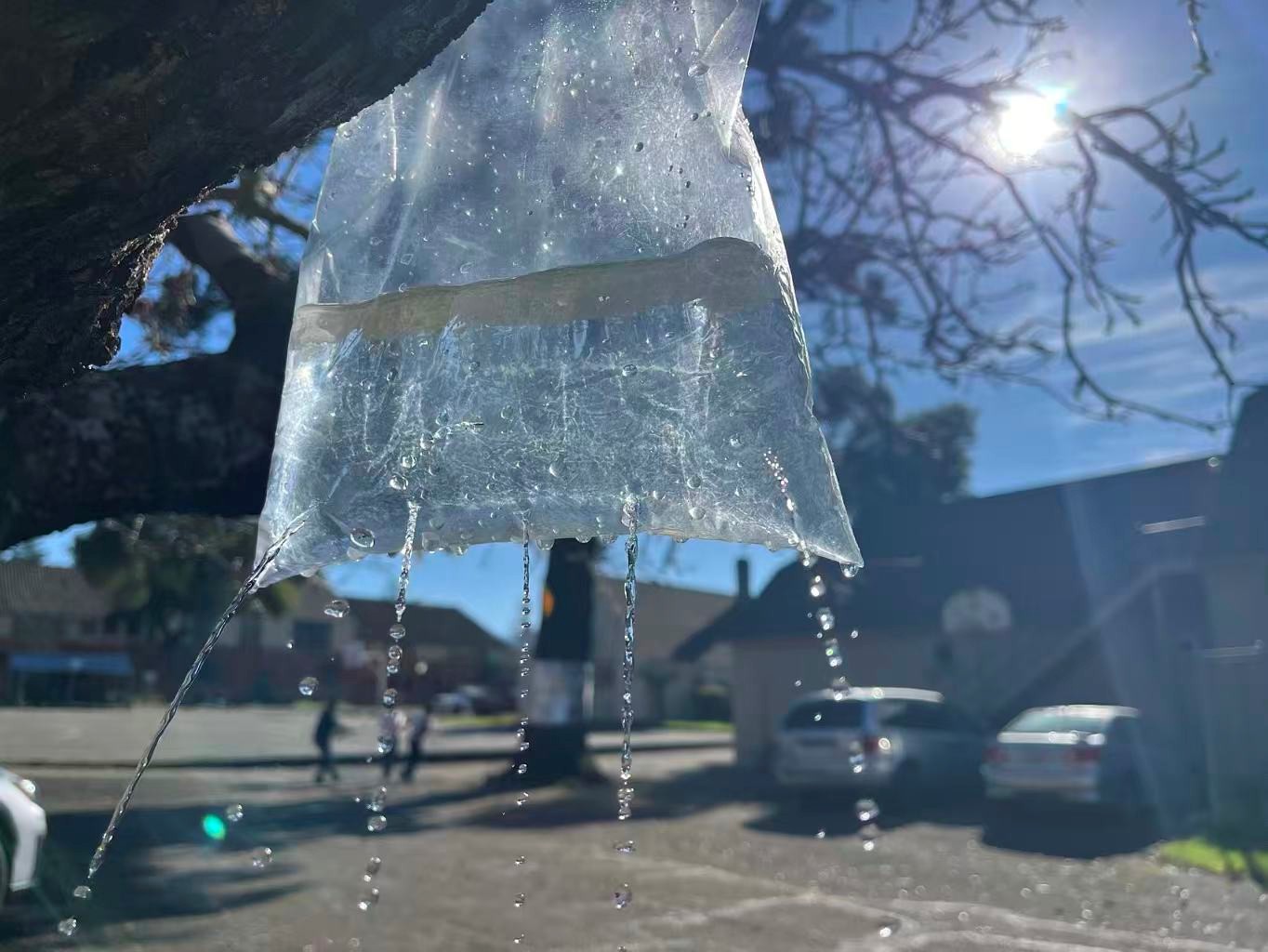
在最後為大家呈現一張我因為「話頭」有感而發所拍的一張圖片,一張或許我們看了後都能看懂的圖片,這張圖的名字叫「漏」。祝福大家在2026年個個都能高高舉起這把金剛王寶劍,斬掉自性中的無明妄想,讓六根都不再有漏。都可以像佛一樣,「身心圓明,不動道場,於一毛端,遍能含受,十方國土」(《楞嚴經》卷二)。
To conclude, I’d like to share an image that I took, inspired by my experience with investigating the huatou. It’s a picture that I think many of us can understand as soon as we see it. I’ve titled it “Leak.”
I sincerely wish that in 2026, each and every one of us will be able to firmly raise this Vajra King sword, cut through the ignorance and deluded thoughts within our own self-nature, and allow our six faculties to no longer leak away.
May we all become like the Buddha—body and mind perfectly illuminated, unmoving in the Bodhi field, able within a single hair-tip to encompass and contain the lands of the ten directions. (Śūraṅgama Sūtra, Roll 2)
Amitābha.
《漏》