Wo yao gei xi dei hui zuo ha gong geh。她被嚇得說:「我有時候也會做一些工。」
那更不得了了,那個官員說:「Hah! nei gei Jen Gin gong lei hui Duo Xu, lei Geng ying gong lei hui zou gung?Em da Woa,Yaosong lei fan oak kei !!!妳的證件說你去讀書,妳竟然說去做工?那是不行的,要送妳回家去!」
哇!恒忍師就嚇得要命… 她拼命念:「南無救苦救難觀世音菩薩、南無救苦救難觀世音菩薩」,然後他們那些官員們就在開會啦,在開會當中,恒忍師也在拼命的念:「南無救苦救難觀世音菩薩」,念到後來,還好那個官員就對她說:「O, haola,lei ng gam wok ,lei hui dou xu yau gong hui zuo gong, yiga fa lei qin jau hoa lek, fak lei sam sap man lek。啊! 妳這是不對的,證件上說讀書,妳卻說去做工,好啦!現在罰妳錢就好,罰妳三十塊!」
James Roberts 講於2011年6月20日星期一晚 萬佛城大殿 A talk given by James Roberts on June 20 (Monday), 2011 at Buddha Hall of CTTB
Audio clip: Adobe Flash Player (version 9 or above) is required to play this audio clip. Download the latest version here. You also need to have JavaScript enabled in your browser.
諸佛菩薩、各位法師、各位佛友:阿彌陀佛!
All Buddhas and Bodhisattvas, Dharma Masters and Dharma Friends, Amitabha.
For those of you who may not know me, my name is James Roberts, and my Dharma name is Chin Zhe ( 親哲 ). I was invited to practice speaking Dharma tonight — but since I’m not very skilled at speaking Dharma, I’m just going to tell you a story. Before I start, I’ll tell you one little bit of Dharma that I know; that for ordinary people like me who don’t have a lot of virtue or wisdom, it’s still possible, and very important, to cultivate good roots. So I thought I would tell a story about my coming to CTTB, and how that has helped create good roots in my life.
There have been two deaths in my family since I came to CTTB in December; my grandmother, my mother’s mother, passed away on Christmas morning, while I was at the Chan session. She had been hospitalized for years, her health gradually deteriorating in a natural way due to her old age. I decided to stay and finish the Chan session and miss her funeral. I’m still not sure if it was the best decision. Some of you are probably thinking now, “Of course that’s not a good decision, you’re being unfilial!” You might be right, but I want to ask you to listen to my whole story before coming to a conclusion. My thinking at the time was that it was more important for me to stay here at CTTB and cultivate than to be at home in person. After all, my brother was home in Maine, taking care of my mother, and he was always closer to her anyway, so I thought it would be a better for him support for her. This was a typical way for me to think about my family for most of my adult life, before I moved here to CTTB.
One thing that changed for me during that time is that I started calling my mother much more often. In the past, most of our phone conversations had felt very one-sided. My mother would usually call me, and in a very motherly way would ask about all the things that were happening in my life. I would answer her questions mostly because it was the easiest way to talk to her. After each call, I would rarely call her back, and usually we wouldn’t talk again until she made an effort to make contact again. In the back of my mind I always had an idea that this meant I wasn’t really being a good son, that somehow I wasn’t really appreciating my mother the way I was supposed to. I think in another way I still found a lot of her attention annoying, like a teenager who wants nothing else but to get out of the nest and finally be free. Even though I’d been fairly independent for many years, I had still not really let go of this attitude from my adolescent years.
So during the Chan session, after I had heard the news from my brother that my grandmother had passed away, I called my mother to see how she was doing, to see if she wanted to talk about anything, and just to listen to her. I think this phone call was a major turning point in my relationship with my mother, because it was perhaps the first time in my life that I reached out to my mother just listen to what she had to say.
About a month later, my stepfather, who had developed cancer over the previous year, was told by his doctor that the cancer had spread to his blood and he would certainly die. His health deteriorated rapidly. My mother decided to stop working to stay at home and take care of him, and I began calling to talk to her more and more often, again, really just listening to what she had to say. The more I called, the more I began to appreciate that I was developing a new kind of relationship with her, one that was much more supportive of her, but also one that I was benefiting from in an entirely new way. When I would call, I would only ask her about how things were for her, how my stepfather was doing, if she was getting all the support that she needed, if she was also taking care of herself. I also noticed that I was enjoying these conversations with my mother much more than I ever had with our old style of relating.
My stepfather passed away in March, and I went home this time, for several weeks, staying with just my mother in the house I grew up in. We went for walks together every day, and went shopping for food together. I cooked dinner every night (always vegetarian of course), she told me stories about what the past few months had been like, and thought about what she wanted to do in the future. I shared songs and chants with her that I’d learned at CTTB.
We found new common ground between Dharma Master Sure’s dharma songs and the peace loving songs that my mother knew from the 60s and 70s. Our relationship continued to change for the better, and in entirely new ways. I think this spring my mother and I finally learned how to become friends.
My stepfather’s body was cremated, and we had a small service at the church I had gone to when I was younger. I grew up attending the UnitarianChurchin Bangor, Maine, which is where my mother and my stepfather met. The church is very open minded, which affinity groups for Christianity, Judaism, Buddhism and Islam. Later that week my mother and I went to the Buddhist affinity group at the church, where we had a short mediation and discussion. In the evening my mother would sit and work on her Sudoku puzzles, while I did recitations for my stepfather. Before bed, my mother and I would hug and say I love you to one another. I remembered when I was younger, when we used to have the same ritual, which somehow we had both forgotten during my adolescence.
Now that I’m back in the city, I often call my mother in the afternoon just to check in. I feel like I’m an important support person for her, and we are closer than we’ve been since I was very young. I’ve become much better at listening to her, and I find a lot of comfort in talking with her. Sometimes when I’m feeling uneasy I’ll call her just to listen to her talk, and I find that talking to her helps me feel more connected and grounded. It’s amazing how much has changed between us over the past few months.
I think somehow the conditions that came together, with losses in my family and my decision to move to CTTB, created a way for my mother and I to resolve some of our past karma. For me, being at CTTB allowed a lot more space for me to contemplate, without getting so caught up in my own concerns and worries, and with more space to listen and pay attention. At the same time, being near the Venerable Master’s eachings on filiality helped me think more about how I might be able to treat my mother differently. For me and my family, all of these conditions came together at the best time for me to return a little bit of the kindness of my mother.
I think one of the most important lessons I’ve learned from this, which is something I could never learn just from studying, is that when a person has the support of a caring community, it supports that person in taking better care of their own family–something that brings benefits to everyone. Amitabha.
比丘尼恆頤 講於2011年7月22日星期五晚 萬佛城大殿 A talk given by Bhikshuni Heng Yi on July 22 (Friday), 2011 at Buddha Hall of CTTB
Audio clip: Adobe Flash Player (version 9 or above) is required to play this audio clip. Download the latest version here. You also need to have JavaScript enabled in your browser.
講於2011年7月23日星期六晚 萬佛城大殿 The talks given on July 23 (Saturday), 2011 at Buddha Hall of CTTB
Audio clip: Adobe Flash Player (version 9 or above) is required to play this audio clip. Download the latest version here. You also need to have JavaScript enabled in your browser.
William Nguyen:阿彌陀佛!我的名字叫William Nguyen,我是從北卡羅萊那州來的。我是一個海軍軍人。是我的姐姐告訴我有這麼個地方,她說:這是一個正法道場。我的師父最近圓寂了,所以我想來這邊試試看,參加一個法會。我姐姐也跟我說,很多人試著來聖城,可是沒有辦法進來,因為護法不讓他們進來。而我乘坐的飛機晚點了,沒有辦法轉第二班飛機……,我當時就想:或許我也不可能來吧?但是,我終於來了。
比丘近梵 講於2011年7月18日星期一晚 萬佛城大殿 A talk given by Bhikshu Jin Fan on July 18 (Monday), 2011 at Buddha Hall of CTTB
Audio clip: Adobe Flash Player (version 9 or above) is required to play this audio clip. Download the latest version here. You also need to have JavaScript enabled in your browser.
沙彌果正及沙彌親偉 講於2011年6月1日星期三晚 萬佛城大殿 The talks given by Shramanera Gwo Zheng & Chin Wei on June 1 (Wed), 2011 at Buddha Hall of CTTB
Audio clip: Adobe Flash Player (version 9 or above) is required to play this audio clip. Download the latest version here. You also need to have JavaScript enabled in your browser.
比丘尼恆雲 講於2011年4月16日星期六晚 萬佛城大殿 A talk given by Bhikshuni Heng Yun on April 16 (Saturday), 2011 at Buddha Hall of CTTB
Audio clip: Adobe Flash Player (version 9 or above) is required to play this audio clip. Download the latest version here. You also need to have JavaScript enabled in your browser.
比丘近湛 講於2011年7月25日星期一晚 萬佛城大殿 A talk given by Bhikshu Jin Zhan on July 25 (Monday), 2011 at Buddha Hall of CTTB
Audio clip: Adobe Flash Player (version 9 or above) is required to play this audio clip. Download the latest version here. You also need to have JavaScript enabled in your browser.
I have heard that on one occasion the Blessed One was staying near Savatthi in the Eastern Monastery, thepalaceofMigara’s mother. Now on that occasion the Blessed One, on emerging from seclusion in the late afternoon, sat warming his back in the western sun. Then Ven. Ánanda went to the Blessed One and, on arrival, having bowed down to the Blessed One, massaged the Blessed One’s limbs with his hand and said, “It’s amazing, lord. It’s astounding, how the Blessed One’s complexion is no longer so clear and bright; his limbs are flabby and wrinkled; his back, bent forward; there’s a discernible change in his faculties — the faculty of the eye, the faculty of the ear, the faculty of the nose, the faculty of the tongue, the faculty of the body.”
“That’s the way it is, Ánanda. When young, one is subject to aging; when healthy, subject to illness; when alive, subject to death. The complexion is no longer so clear and bright; the limbs are flabby and wrinkled; the back, bent forward; there’s a discernible change in the faculties — the faculty of the eye, the faculty of the ear, the faculty of the nose, the faculty of the tongue, the faculty of the body.”
That is what the Blessed One said. Having said that, the One Well-gone, the Teacher, said further:
I spit on you, old age –old age that makes for ugliness.
The bodily image, so charming,
is trampled by old age.
Even those who live to a hundred
are headed — all — to an end in death,
which spares no one,
which tramples all.
It is difficult to cultivate when there are many karmic obstacles. However, if we are sincere, the Buddhas and Bodhisattvas will respond to our sincerity, helping us to strengthen our faith and also to remind us of impermanence.
I would like to share some things that I have encountered in my cultivation.After taking refuge in 1987 and studying the Buddha dharma, I began to have dreams of me flying. In every dream, there was always someone chasing me. I would get scared and wake up.
After a while I began to reflect on my childhood. I recalled that I used to chase young birds, catch them and put them in the cage as pets. I also made sling shots to kill birds. My friends knew that I was good with my sling shot so whenever they spotted a big bird they would let me know.
Due to this evil karma that I have created, I began to liberate birds whenever I had the chance. I also bought bird feeders to feed the birds that come to my backyard. After a while I noticed that I no longer had these nightmares of flying. But I notice that I am aging more rapidly and also getting sick more often.
I remember one time I went to see the doctor. I walked into the clinic and the receptionist greeted me with a “Chao Chu”. “Chao” means hello and “Chu” is how a person addresses someone who is much older than them but about the same age or a few years young than their dad. I looked at her and said “why don’t you call me Bac instead?”. Bac is used to address someone who is older than their father. She pulled my chart and said “Sorry, big brother”, knowing that I was joking.
A few months after coming to CTTB, I was helping TJ lay some brick near the Dragon Tree houses. At the end of the day I told him that I was tired because I have not done this kind of work in a long time. He looked at me and said “I would be tired too if I were your age.” I did not know how old he thought I was so I told him my age. He quickly turned away covering his mouth with his hand, and I heard him say “oops!”
I told him that he was not the only one who thinks that I am really old. I quickly told him another true story, hoping that he wouldn’t feel as bad. This happened when we visited CTTB in August 2008. After one evening ceremony, I went outside and I saw two dharma masters talking to Ashley. When one of the DMs saw me, I heard her say to Ashley, “you also brought your father along?” I slowly walked away toward a different direction. Out of the corner of my eye, I think I saw the other DM making gestures with her hand and eyes. I think she was trying to tell the first DM that I was the husband. TJ didn’t even laugh!
TJ didn’t even laugh! Later that evening, I told Ashley to start calling me “dad” and I asked my daughter, Megan who was about 5 years old at the time. “If your Mom calls me “dad” then what would you call me?” She thought about and replied, “Is it Grand-dad?” Last year when I went back toKansasto take care of some things, my father-in-law commented that I look like an 80 year-old man. I looked thinner to him and he was concerned about my weight and health. He encouraged me to eat more.
I know I look old for my age, but it’s not as bad compared to my younger brother. My sister was excited when she called me after she showed her wedding video to her friends. When they got to the part where I was speaking, they asked if I was her older brother, which I was. But then when my younger brother spoke, they asked “is that your father?” My brother got a good laugh out of it after I told him the story. He knew that aging is a fact of life.
These stories may be funny, but they remind me that old age and death are coming near. There is not much time left, so as the VM taught, don’t let it pass by in vain.
Now I would like to read a story that I found written in Vietnamese by Hanh Giai.
There is a small river flowing from a high mountain to villages, to the forests, and finally it flows through a desert. It thought: “I have overcome many obstacles, hopefully I can make it through this desert!?” When it decided to cross the desert, it found that its water was being gradually consumed by the sand of the desert, it tried again and again but its effort only ended up in vain. So it got frustrated and gave up.
“Perhaps my destiny is only thus far. I would never see the vast ocean as I have heard others say.” It kept muttering with sadness. At that time, the four sides of the desert suddenly rang out a soft clear sound: “If a breeze can cross through the desert, then the small river may also pass through.” It turned out that it was the voice of the desert.”
The River angrily protested: “This is because the wind is light therefore it can fly through the desert, but a river like me must flow through instead of flying.” Desert replied: “Because you are so attached to your form, that is why for the rest of your life, you can not pass through this desert. You have to transform yourself into water vapor so that the breeze can carry you across the desert, to where you need to go. All you have to do is to let go of your present form as a river and harmonize yourself into the breeze, then you will pass through this desert. ”
The river had never thought about letting go its form of a river to harmonize with the wind, no, no, not like that, it can not accept the concept. It thought that if its self is disposed, the river would be destroyed, and then there is no use of passing through the desert?! Desert consistently explained, “In the wind, there is water vapor, (which comes from the river). The wind carries the water vapor across the desert to its destination, then it evaporates to create the rain, after that the rainwater flows and forms into the river, is this not you?
The small river asked, “Will I return to my original form? The Desert replied, “It can be yes, and it can be no. Whether you are a small river or a water vapor that cannot be seen, your inherent nature will never be changed and because you are so attached to the fact that you are a small river that is why you cannot recognize your own inherent nature”.
Now the river seems to understand the words of the desert, thinking that before it became this small river, it would have been carried by the wind to the villages, into the forest, across the dessert, forming rain and flowing into the river, which is itself today … ..!!!
Commentary: The journey of our life is like a small river. To overcome obstacles in life, to reach a new achievement, aiming for truthfulness, kindness and beauty, we must have courage to “Let go of the self” so we can get to states which we have not yet known.
 師父上人及各位善知識:今天輪到恒頤上來作報告。
 諸佛菩薩、各位法師、各位佛友:阿彌陀佛!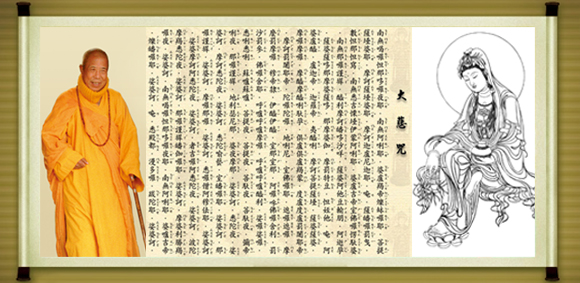
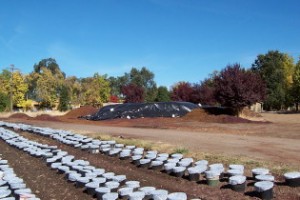 那講到這個慈悲呢,希望大家可以發揮更多的慈悲心。為什麼呢?因為最近發生了一個很大的新聞,可能大家還沒有發覺到。大家每天都吃那個蔬果啊,那個有機菜園的菜,大家很開心。可是你知道嗎?最近這幾年來我們那個堆肥裡面都不知不覺地,堆了很多的毒啊。什麼毒啊?居然還有保麗龍,還有他們找到那個電池啊,還有塑料袋、塑膠等垃圾,還有銅刷所掉出來的絲啊,還有很多,不可說不可說那麼多的東西(蘊藏在裡邊)。那一回我看到那位,我們的農夫,他送給人家的堆肥裡面居然還有一大片的塑料袋。你說,怎麼會這樣呢?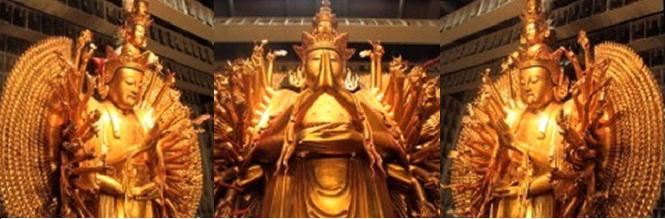
 沙彌果正:
沙彌果正: 沙彌親偉:
沙彌親偉: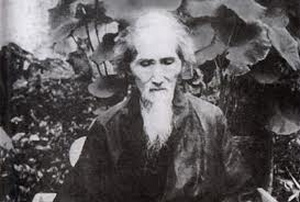 師父上人慈悲!各位法師、各位居士: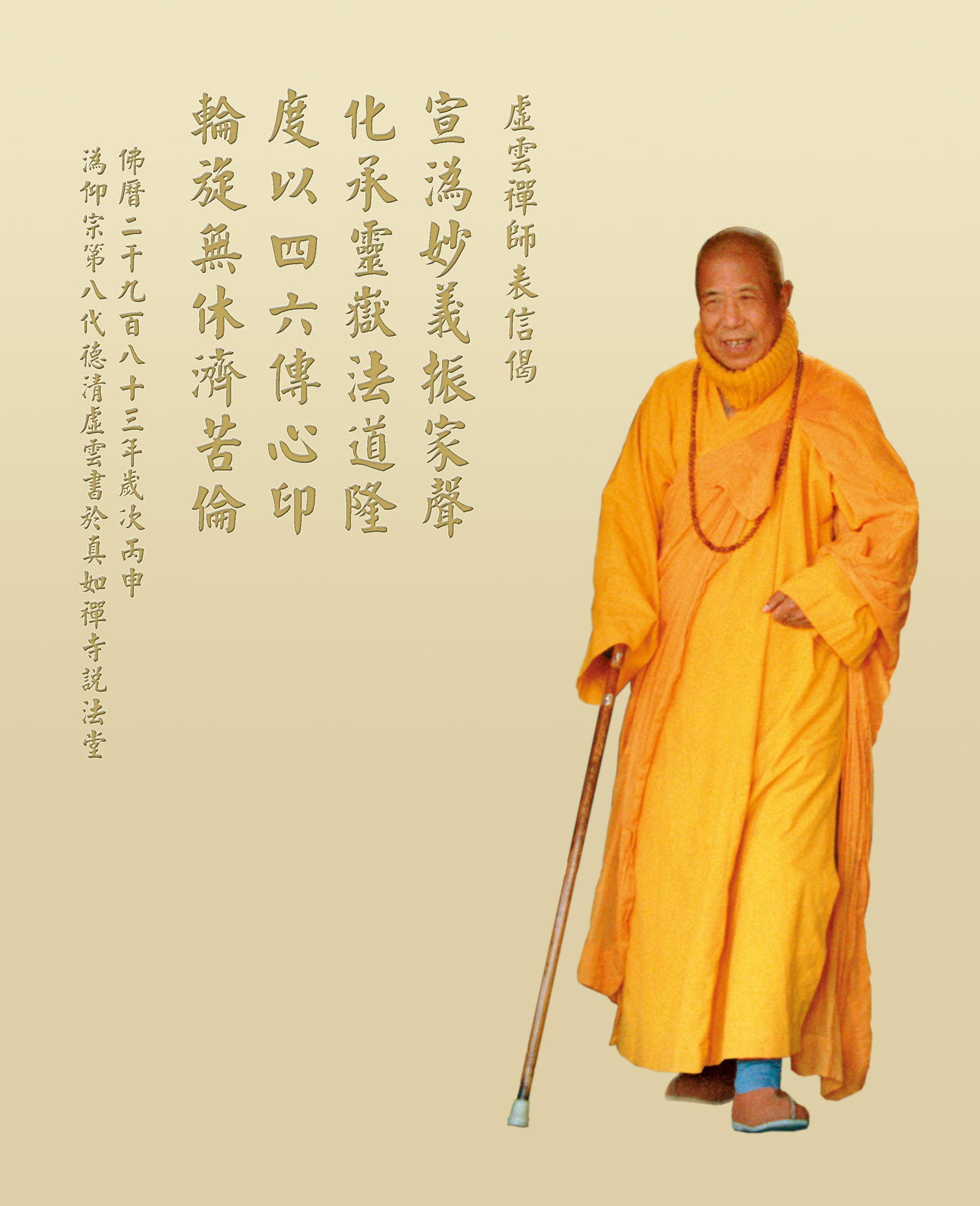
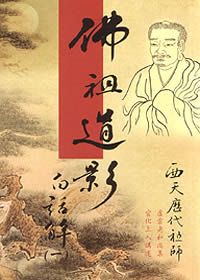 他所增訂的這個《佛祖道影》送給了上人,他希望上人留存,也希望上人能夠以《佛祖道影》來自利立他。所以,上人後來在聖城、在金山寺也以這個本子,講過《佛祖道影》,為我們講解每一尊祖師的德風,讓我們見賢思齊。所以,我們現在所聽的《佛祖道影》,這個因緣是從這裡來的。
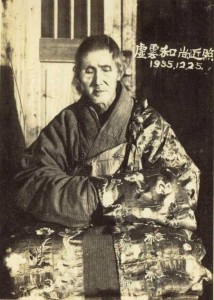 以後,他又陸陸續續重建了昆明的雲居寺,這是在他81歲到90歲的時候重建的;後來,在他90歲到95歲時,福建省主席又請他去重建鼓山;在95歲到104歲時,他重建了曹溪南華寺;在104歲到113歲時,重建了大覺雲門寺;在114歲到120歲,他來到了雲居山,可以說把雲居山從一個荒蕪的,一無所有的狀況下,重建下來,一直到他120歲圓寂在雲居山。